Home

Our group’s research interests range over the following areas:

  • Cosmology, galaxy formation, evolution and mergers,
  • Stellar evolution,
  • Properties of materials and the vacuum in ultrastrong magnetic fields,
  • Physics of white dwarfs, neutron stars and black holes,
  • Magnetic and relativistic stellar structure,
  • General relativity.

News

Ancient Stars, New Physics: Constraining Axions with White Dwarfs in 47 Tucanae

Can some of the oldest stars in our Galaxy help reveal the nature of dark matter? In a new study, Axion Constraints from White Dwarf Cooling in 47 Tucanae, we used observations of white dwarfs in the globular cluster 47 Tucanae to search for evidence of axions, hypothetical particles that are among the leading candidates …

The Missing White Dwarfs: Investigating a Mysterious Gap in Stellar Evolution

Science advances not only through discoveries but also through mysteries. In a recent paper, Investigating the Observational Progenitor Mass Gap in the White Dwarf Initial-Final Mass Relation, we explore an unexpected deficiency of white dwarfs originating from stars within a particular progenitor mass range. Previous studies hinted at a gap in the Initial-Final Mass Relation, …

Cosmic Timekeepers: Using Ancient White Dwarfs to Measure the Age of 47 Tucanae

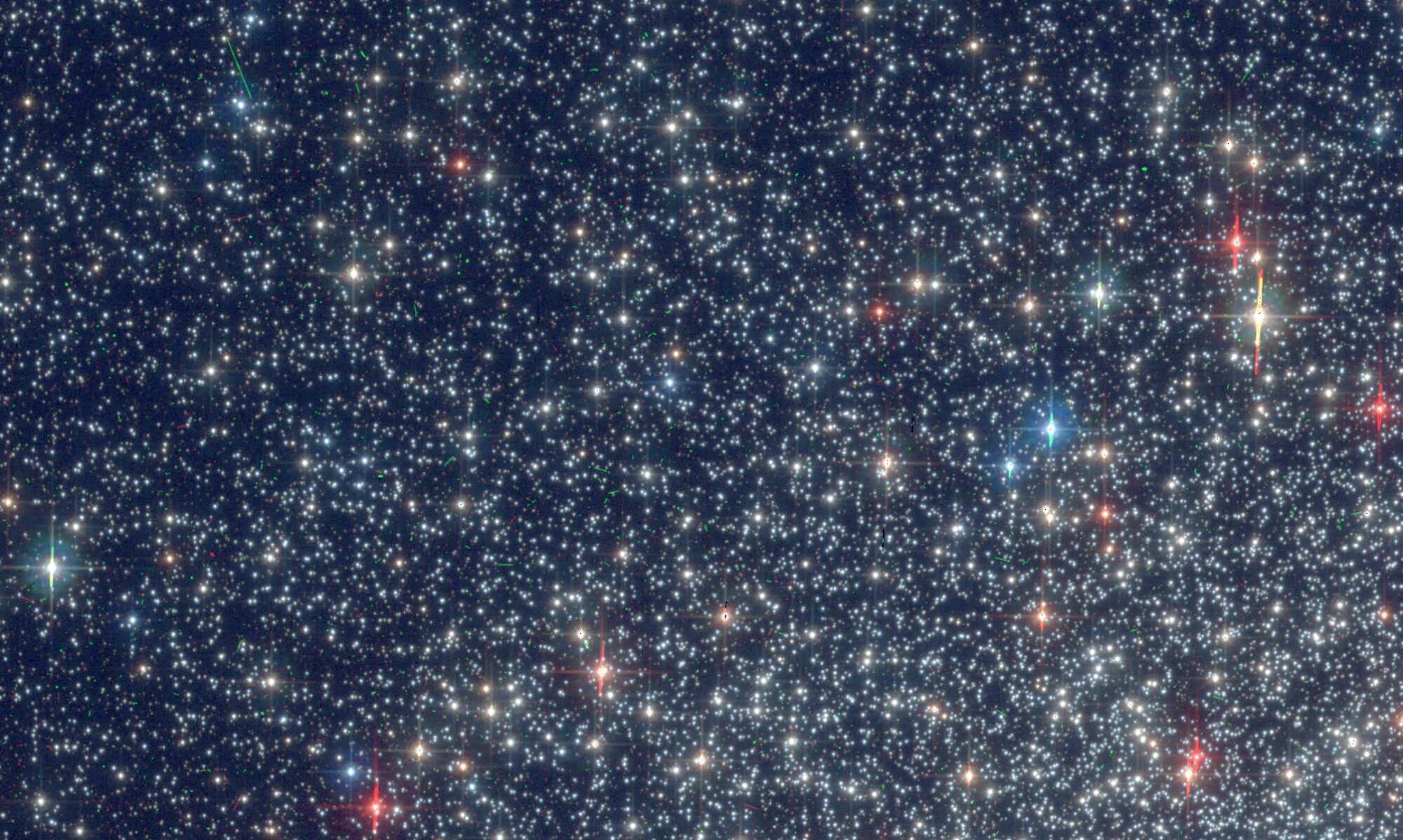
Some of the oldest stars in our Galaxy reside in globular clusters, and among the most useful members of these stellar cities are white dwarfs. In our latest work, The Cooling of Old White Dwarfs in 47 Tucanae, we examine the faintest white dwarfs in the famous globular cluster 47 Tucanae. These stellar remnants gradually …

Major Projects

  • X-ray Polarization of Neutron Stars and Black Holes
  • Stellar Astrophysics:
    • Carbon Stars as Standard Candles
    • White Dwarfs as Probes of Stellar Evolution and Fundamental Physics
  • Software for Astrophysics at Github
  • Canada’s Flagship X-ray Telescope
https://www.colibri-telescope.ca/wp-content/uploads/2019/12/logo100.png

Key Question

How is our understanding of astrophysical phenomena connected with our understanding of fundamental physics?